We plan to introduce a new, unique ornament every year, with each piece representing the rich tradition of Italian ceramic art. The ornaments will be marked with the year of creation and signed by the artist to guarantee their authenticity. Begin your collection this year and enhance your holiday décor with a touch of Italian artistry.
Keepsake boxes are versatile Italian treasures, perfect as jewelry holders, party favors, candy boxes, or bomboniere.
While you may be familiar with the tradition of party favors, the bomboniere tradition might need some explaining for those who are not Italian.
Bomboniere are traditional gifts given to guests as tokens of gratitude for attending a wedding, christening, first communion, confirmation, or graduation party.
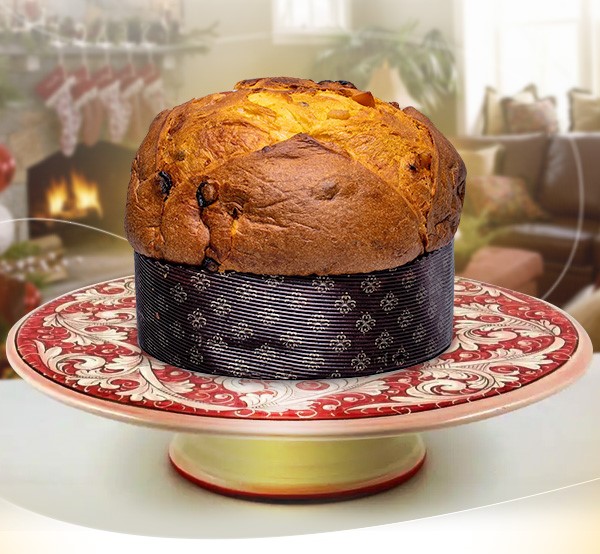
Make Panettone the highlight of your festive entertaining
Panettone is the ultimate Italian Christmas cake, instantly recognizable for its domed shape and its sweet, buttery dough studded with candied fruits and raisins.
Baking a panettone at home is a labor of love, but if you are up for the challenge, you can find a recipe at the end of this post. If you do not feel confident enough to make it yourself, don’t worry!
Most Italians purchase it from their favorite pasticceria, and you can probably find a quality Panettone at your local specialty store.
For us Italians, espresso is more than a drink; it’s a moment of pure pleasure. You’ll often see us savoring our daily shot with closed eyes, relishing in the moment.
There is no simple answer to the question of how Italians prefer their espresso. If you were to watch four Italians ordering their daily espresso at a bar, you would notice that each of them requests a different type of coffee. They may ask for differences in temperature, quantity, brewing process, or ingredients.
To help you understand the basics of Italian espresso culture, here is a brief menu, which you can use to try different varieties and find your favorite espresso. It might even inspire you to plan your next trip to Italy to test your knowledge!
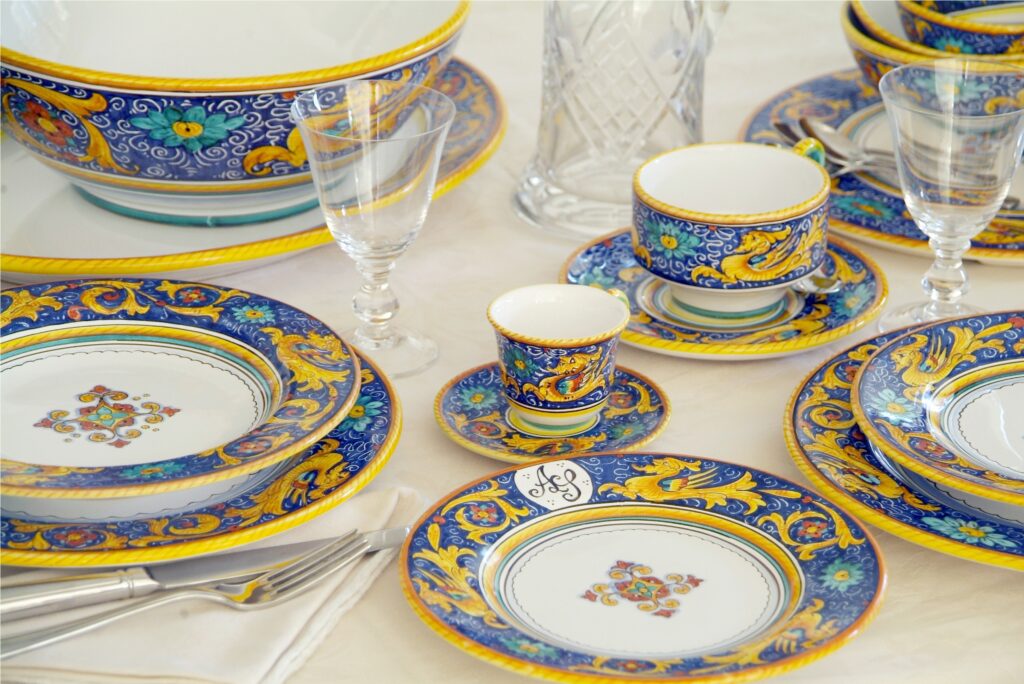
The artistry of handmade Italian dinnerware explained
Selecting the perfect dinnerware set requires careful consideration. With so many options in terms of brands, designs, and materials, and considering the cost involved, the task can be daunting. If one of the options you are considering is purchasing hand-painted Italian dinner plates, I can definitely give you the lowdown.
The craftsmanship unveiled: how is Italian dinnerware made
Italian dinnerware sets are usually crafted from ceramic, a word that comes from the Greek term “keramos,” which means “clay.” Ceramic covers a range of materials, including porcelain and pottery. Most Italian dinnerware is made from earthenware fired at temperatures around 1800°F to 2100°F. This tradition goes way back – there’s evidence of earthenware pieces dating back to 1400-1200 BC.
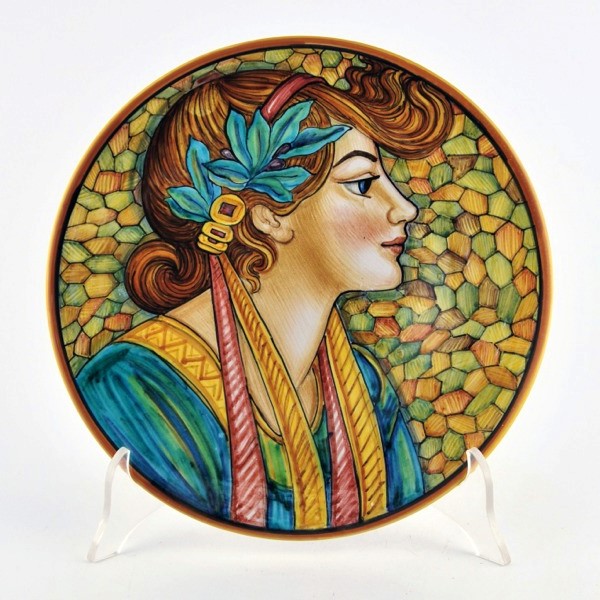
Art Nouveau developed in the 1890s across Italy and the rest of Europe, energizing the art scene with its exciting and seductive works of art that continue to influence contemporary artists and designers today.
Refusing classicisms and Europe’s modern identity of industry and mass production, artists purposely set out to revolutionize art and create something new – hence Art Nouveau. They drew inspiration from nature, abstracting organic subjects into sophisticated, flowing motifs.
Seeking to infuse everyday life with a new aesthetic, Art Nouveau sewed fine arts and craftsmanship together while successfully tearing down the hierarchies between the arts. Traditional handicrafts had a glorious revival, with artists aiming to enrich the lives of the public by improving the design of domestic spaces and objects. Art Nouveau’s legacy continues to inspire Italian artists and artisans today. We have handpicked a small selection of pewter and ceramic works of art to discover and delight in.
Commissioning an Italian artist with a site-specific art project
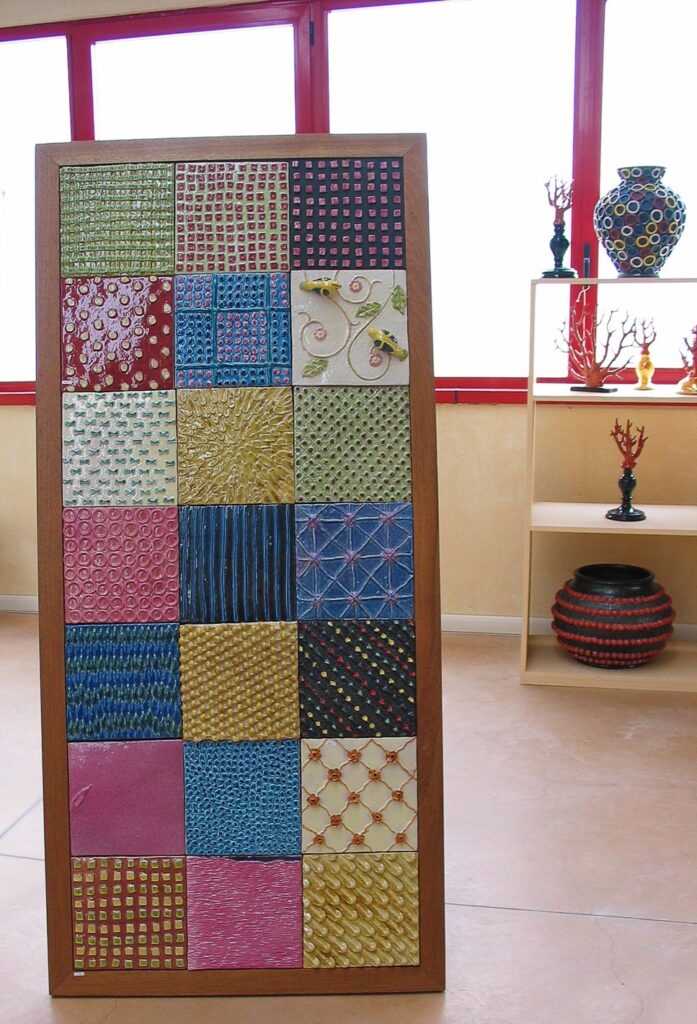
The first time I saw ND Dolfi’s amazing Tuscan tiles, I was visiting the artist’s studio in Montelupo Fiorentino. It was over 15 years ago. Silvano Dolfi had created large tile panels supported by free-standing iron structures. The multi-colored installations dotted his lawn, positioned so he could see them from the large windows of his beautiful Tuscan casale. Similar to giant paintings, they acted as a strange reversal of the common indoor-outdoor decoration.
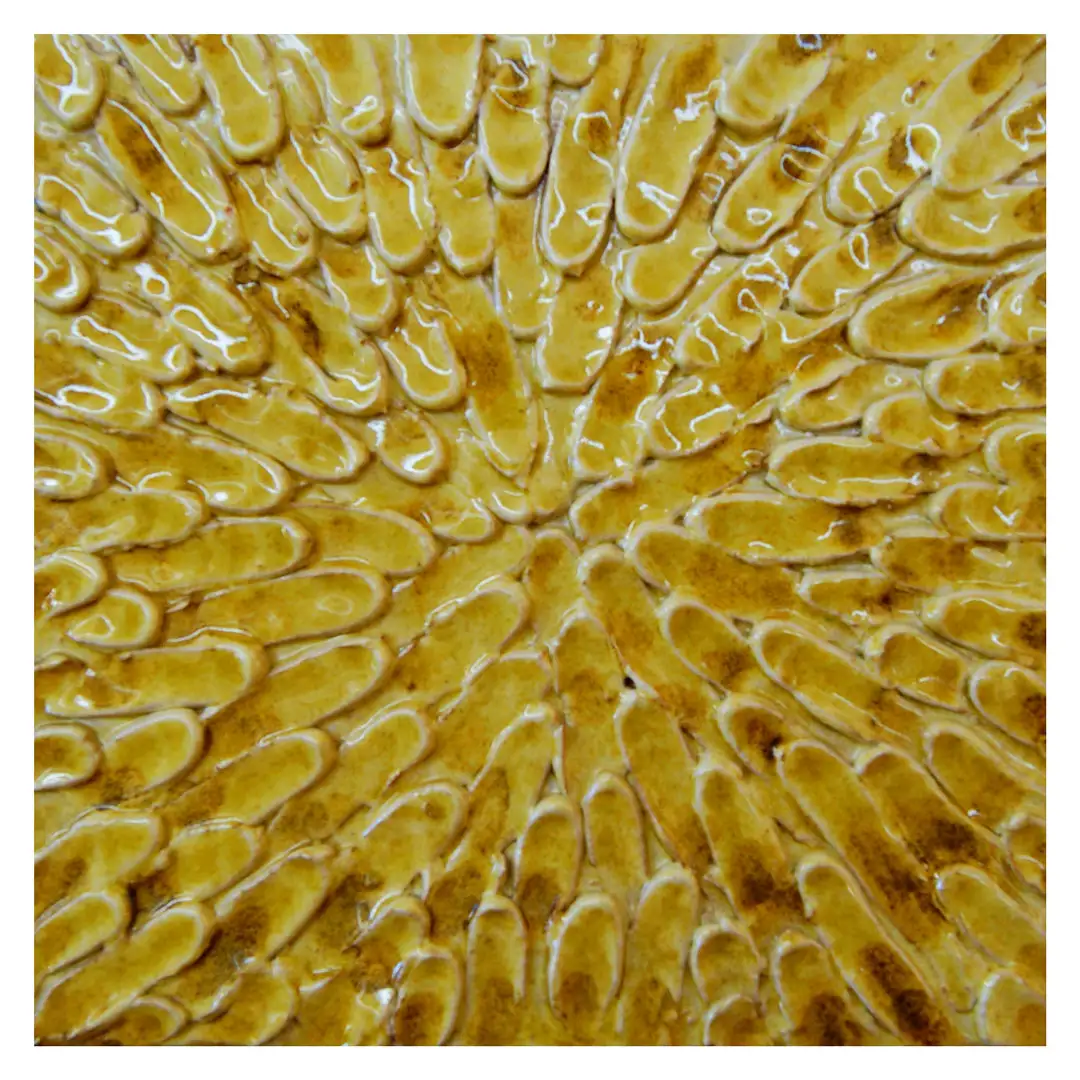
I saw them again a few years later in his daughters’ workshop. They were grouped to form large, textured surfaces – each tile fighting for attention with its bold colors and unusual patterns.
By then, Natalia and Daria had followed in the steps of their famous father and started contributing to ND Dolfi’s collections.
I knew I wanted those tiles in my life, but I had to wait until I had the right space and an inspiring décor idea. A few years later, I completed the renovation of my family’s country house and realized that the living room – its 15-foot high ceilings and large windows overlooking the garden – was the perfect space for a large tile panel.
However, it took me a few years of living in the house to know exactly what I wanted and how to achieve it. At that point, I was ready to commission Natalia and Daria Dolfi my ceramic wall panel.
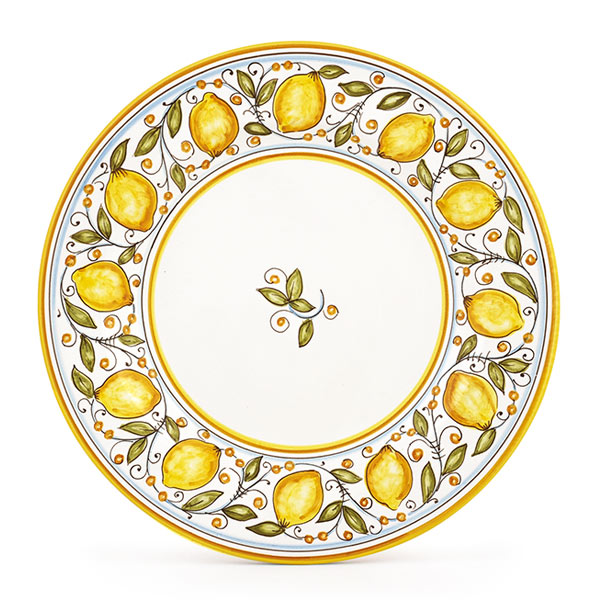
Since antiquity, lemon trees have been considered a valuable luxury and a symbol of prosperity. Their fruit is a symbol of the Mediterranean lifestyle, sunny outdoors, blue skies and leafy greens. Lemons’ sunny yellow evokes energy, light, warmth. No wonder lemons have been inspiring generations of Italian artists and artisans!
Lemons and interior design
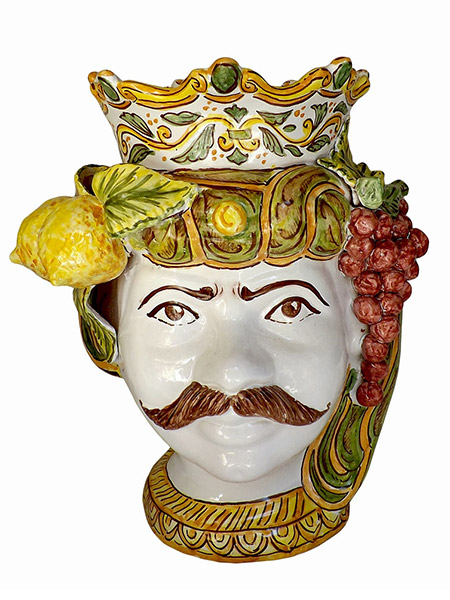
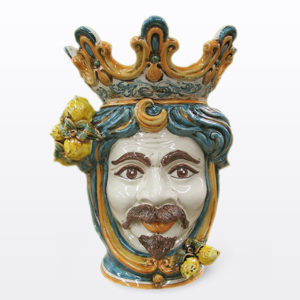
Lemon-themed ceramics are the perfect accents for Mediterranean decor style. A geographical variation of the much broader coastal decor trend, it focuses on light and warm color schemes, and extensive use of natural materials such as ceramics, wood, and wrought iron. Statement pieces, such as bold ceramic Sicilian heads, large planters, rich textiles and tilework, are often used to amp up the space’s color.
The true nature of lemons
The proverbial phrase “When life gives you lemons, make lemonade” has somehow given lemons a bad rap. It implies lemons are sour or difficult, when they are quite the contrary. Perhaps the person who coined that phrase just never visited Italy in late spring, when luscious lemons are at the peak of their harvest. Picking a large, untreated lemon directly from a tree overlooking the Mediterranean Sea releases a rush of sweet, citrusy aromas that intoxicate the brain. Left to ripen on the tree, the lemon actually becomes sweeter, so much so that some Italians love to eat them plain with just a pinch of salt.
Although originally from Asia, the lemon tree has been cultivated in Italy since as early as Ancient Roman times. They were grown along the coastline as a prime crop, thanks to their high levels of vitamin C which were important in preventing scurvy among sailors. Today lemons are as “Italian” as olives, espresso, and handmade ceramics. The mild, sunny Mediterranean weather – especially in Sicily and along the Amalfi Coast – is the ideal climate for the tree.
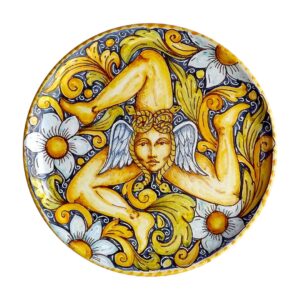
The Trinacria, also known as Triskelion, is the familiar three-legged symbol of Sicily.
Everywhere you go in Sicily, you will see a Trinacria, the symbol of our beautiful island. And if you are tempted to bring one home, you’ll have plenty of choices, from sophisticated ceramic Trinacria wall plates from Caltagirone to inexpensive fridge magnets. Of course, we do hope that you’ll go for one of the stunning Sicilian pottery pieces handmade by local artists and artisans, such as Ghenos or Sofia.
Regardless of your choice, you may want to learn about the origin of the Trinacria and impress your fellow travelers with some captivating anecdotes about the origins of Sicily and its three-legged symbol.
Let’s explore the island’s myths and legends, one by one.
Italian ceramics, or Italian pottery, have been in my life for quite a long time: I collect them, I read about them, I sell them.
In Italian, when I say ceramica, everybody understands what I mean. On the contrary, when I talk with one of my American friends, I’m always uncertain: should I say Italian pottery, Italian ceramics or Italian majolica?
In order to do away with any doubt, I did some research. I did learn quite a lot on the subject, and I would love to share my findings with you.
Let’s start with technicalities.
Here is a short review of the definition of the words Ceramics, Pottery and Majolica.
Once we know exactly what we are talking about, we will define what they really mean to people.