Mario Pezzi – Panels of Italy

Jan. 8 – Feb. 3, 2010
Faenza – Italy

This year we Italians celebrate the 150th anniversary of the our country’s Unification. One of the first Italian ceramic artists to celebrate this meaningful event is Mario Pezzi.

His exhibition features 11 majolica panels that ironically and cleverly describe the vices (and virtues) of our country.

Hard to remain cold to his art and the themes he’s chosen to deal with. The Acrobat promising less taxes and more money is certainly a hot subject for most Italians, but it’s also the timeless character of the comedy of life, wherever it takes place.
Continue reading →

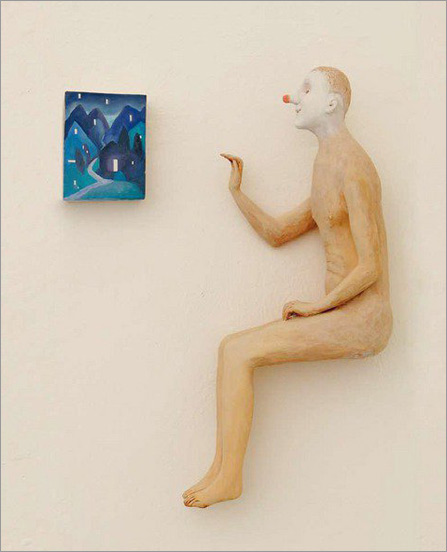
Pino Deodato – The Circus of Art

Jan. 15 – Feb. 18, 2011
Lucca – Italy

Pino Deodato work very much reflects his life: simple yet not simplistic, intimate and rich of positive values. It’s an art made of balance and a healthy sense of measure, on the pursuit of truths and meanings that mankind seems to have lost.

This specific project starts from a naked clown, looking at life with the playful eyes of a child.
He embodies Art, that does not need any ornaments (clothes) for its creative effort.

Continue reading →

Collecting Italian Art Ceramics: Ab Ovo Gallery

Ab Ovo is a small art gallery, hidden in a side alley in Todi, that is becoming increasingly popular among applied art collectors.

Its founder and owner, Leonardo Persico, and his partner, the acclaimed art jeweler Jacqueline Ryan, have been doing a great selection job over the last three years, presenting the works of Italian and European artists with a constant eye on quality.

Manuela and I met Leonardo in our first visit to the Gallery. We walked in by chance, attracted by a small signpost on the main street. He welcomed us, surrounded by amazing ceramics by Kati Junger and Christiane Wilhelm, cute textile accessories, hand made art jewels and one–of- a-kind furniture and objects of Peter Heidhoff.

Continue reading →

Riccardo Biavati – Poems, Dreams, Secrets and Tales

Until January 2011
Chiavari – Italy

Riccardo Biavati was born in 1950 in Ferrara. As a child, he loved to listen to the tales his grandfather invented for him. In an interview to Marialivia Brunelli he admitted that he never left the fairy world that he inhabited during his childhood. It’s a parallel world, where dreams come true and frogs, owls and blackbirds are familiar figures in the landscape. He calls them “his personal archaeology”, that he playfully combines with ancestral elements: the sun, the moon, the sea, wind, fire and, most importantly, mother earth.

Biavati’s works positively exude emotions and dreams. It’s part of their charm and you can’t help to feel light hearted and … smile.

“Poesie  Sogni  Segreti e Racconti”
Galleria d’Arte “Cristina Busi”  Chiavari
via Martiri della Liberazione 195/2 Chiavari (Genoa)
Ph. +39 0185 311937
Email: info@galleriacristinabusi.it

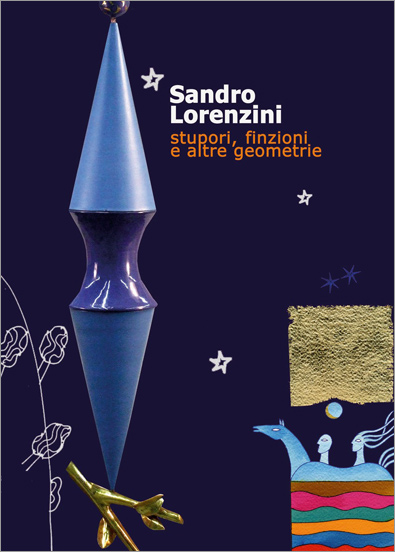
Sandro Lorenzini – Wonders, Shams and Other Geometries

Dec. 4, 2010 – Jan. 31, 2011
Savona – Italy

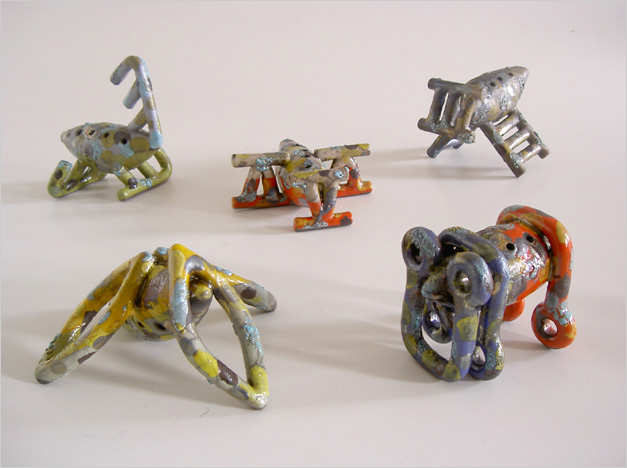
The long theatrical activity as scenery designer and his interest in neofigurative art are the key contributors to Sandro Lorenzini’s ceramic works. Possibly these are also the reasons why he molds figurative forms, often archaic shapes that are suspended between dreams and nightmares.

In 1975, after many years spent creating theatre sceneries and listening to stories invented by other artists, Lorenzini started inventing his own stories, using sculptures instead of words. Clay had all the qualities he needed to give birth to the figures that were crowding into his mind.

In a lecture at the Foshan Ceramic Congress held in China in 2002, the artist explained why he was so much attracted by clay. He words were heartfelt and memorable: “ Clay is the material of creation, as many myths teach us: molding clay is God’s job. Using clay men can make everything and represent anything” (www.sandrolorenzini.it).

With patience and absolute commitment he learned the language of clay.

Continue reading →

Sprout Arte – Old Testament Genesis – Clay whistles

Dec. 3, 2010 – Jan. 10, 2011
Sacile – Italy

Denis Imberti and Stefano Tasca (Sprout Arte) are two ceramic artists from the Veneto region, specializing in whistles.

In Veneto the art of making clay whistles – Cuchi – dates back to the 19th century, when they
became very popular satirical weapons against the establishment.
Fascinated by their history, their symbolism and their primordial “voice”, Denis Imberti and Stefano Tasca started creating whistles as a group in 2001.

They’ve learnt from the tradition, without ever ceasing to experiment new shapes and sounds. Indeed, their work is a delight for each of our senses (but smell, perhaps!).

About clay whistles
As a  “breath of life, kneaded with mud and hardened by fire” (reported from Sprout Arte website) the whistle is almost as old as mankind and attached to many cultures around the world.  Continue reading →

Graziano Carotti – Friday, 17th

Dec. 17, 2010 – Feb. 7th, 2011
Montefalco – Italy

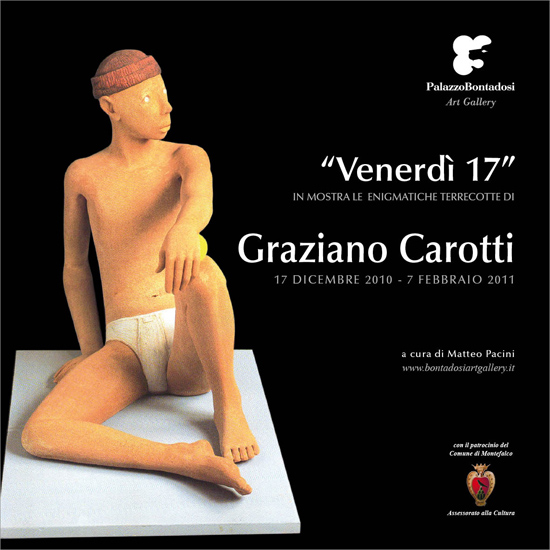
Italian Ceramics - Graziano Carotti - "Venerdì 17"Graziano Carotti’s works have the subtle power to provoke or to astonish. They never let you go by without an afterthought.

His terracotta figures seduce you with their formal simplicity, their softly realistic clothes and their  deceptive sweetness. But their soul is elusive and mysterious.

Lost in their inner world, Carotti’s figures seem to be concentrating on finding the answer to vital questions. Which makes you wonder, of course, on the nature of their questions…

Continue reading →

Your Christmas Travel Guide to Italian Pottery Events: Ceramic Nativity Scenes in Grottaglie

Dec. 11, 2010 – Jan. 9, 2011
Otranto – Italy

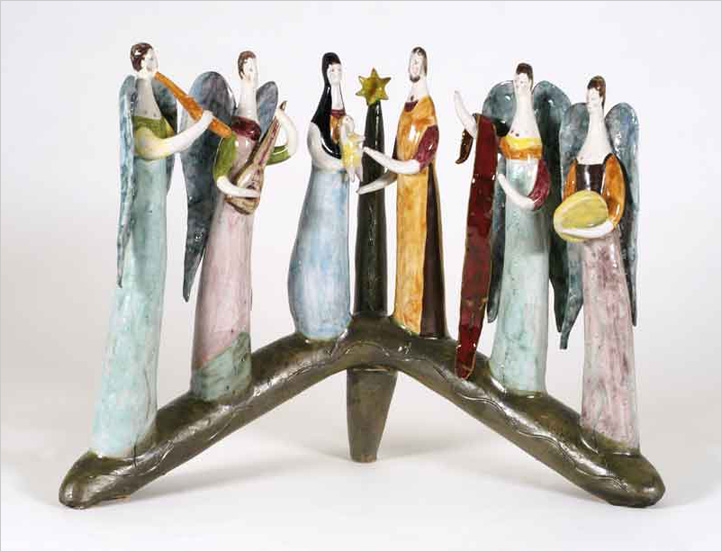
Italian Pottery - Ceramic Nativity scene - Photo credits: www.puglialive.netGrottaglie has been a hot spot for pottery making in Italy since the Middle Ages thanks to its distinctive style and its varied shapes.

The production of Nativity scenes made of painted terracotta started in the 19th century. The figurines were very small: shepherds, angels, the three Kings, Mary, Joseph and Jesus being the key miniature characters of a tiny yet detailed landscape.

At the end of the 19th century the Nativity scenes made in Grottaglie were so popular that many pottery makers specialized in this peculiar art, making celebrated masterpieces. The most famous artists were Petraroli, Manigrasso, Micera, Esposito, Peluso.

Continue reading →

Your Christmas Travel Guide to Italian Pottery Events: Tuscan Pottery and Textiles

Nov. 20, 2010 – Feb. 28, 2011
Prato – Italy

Italian Ceramics - Tuscan Pottery and Textiles - Photo credits: www.museodeltessuto.itA dialogue between Tuscan arts during the Renaissance. This is the subtitle of this unusual exhibition, stemming from the joint efforts of the Textile Museum in Prato and the Museum of Ceramics in Montelupo Fiorentino.

From the Middle Ages to the Renaissance these two arts represented a major source of income for the area between Florence and Prato, in Western Tuscany, the outstanding quality of their artifacts, their creative excellence and exquisite taste being the key reasons for their popularity.

Interestingly, the pottery made in Montelupo from the 14th to the 16th century shows a certain resemblance to the patterns of silk textile designed in the same period of time. This is indeed the main theme of the exhibition, that compares the two arts from the point of view of designs and common cultural models and highlights their similarities.

Continue reading →

Maurizio Tittarelli Rubboli – Meet the artist

Last Friday isItalian Ceramics - Meeting the artist Maurizio Tittarelli Rubboli a day to remember. Manuela and I met Maurizio Tittarelli Rubboli in Gualdo Tadino, his home town. He had invited us to see his old kilns or “muffole”, dating back to 1884 and 1920.

Gualdo is a small village, nested on the first spurs of the Appennini, not too far from Perugia. We parked near the Rocca Flea, a massive fortified castle from the 13th century. Maurizio was waiting to show us the old Fabbrica Rubboli, just a few steps downhill.

The place does need to be restored! It’s a long stone building, now completely decaying, that is supposed to become the future Rubboli Museum. How far into the future, no one knows, unfortunately. Actually, Maurizio is fighting tooth and nail to protect the heritage of his illustrious ancestors and that of the pottery from Gualdo Tadino and kick off the project of the Museum … but this is another story.

Continue reading →