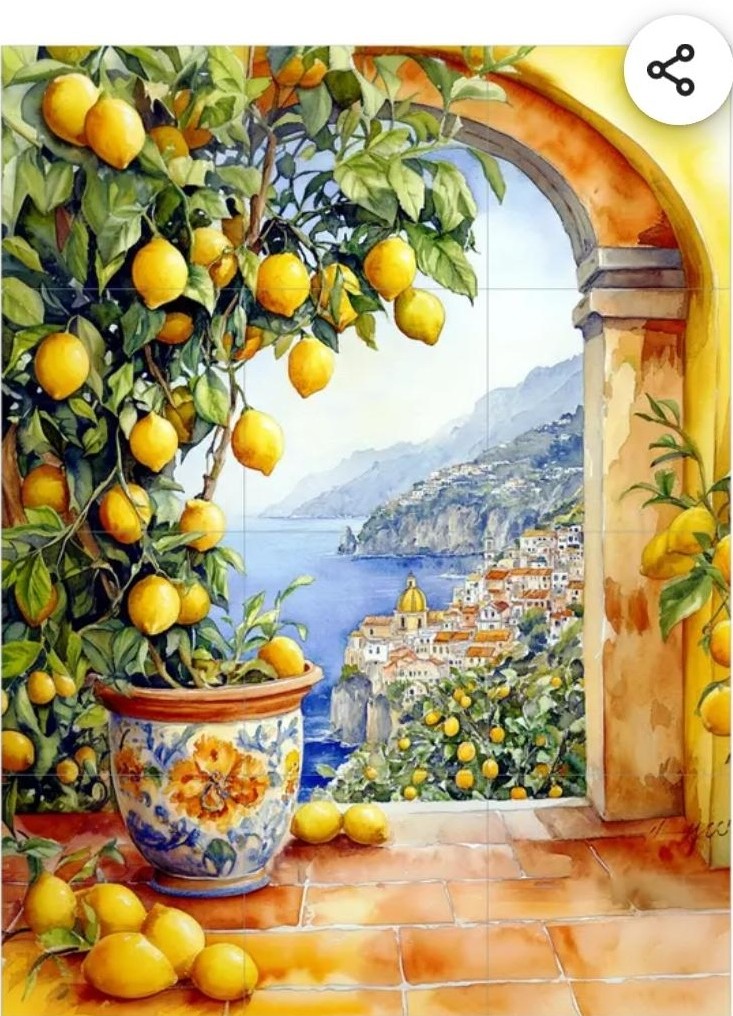
This project began with a photo the client found online. The image—a stunning Italian coastal landscape adorned with lemons—perfectly captured the essence of the “exquisite peninsula,” as described by the most discerning travel writers.
The client envisioned transforming this picturesque scene into a mural for her large stovetop, aiming for a distinct vintage vibe with colors that would coordinate with her cabinets, countertop and floors.
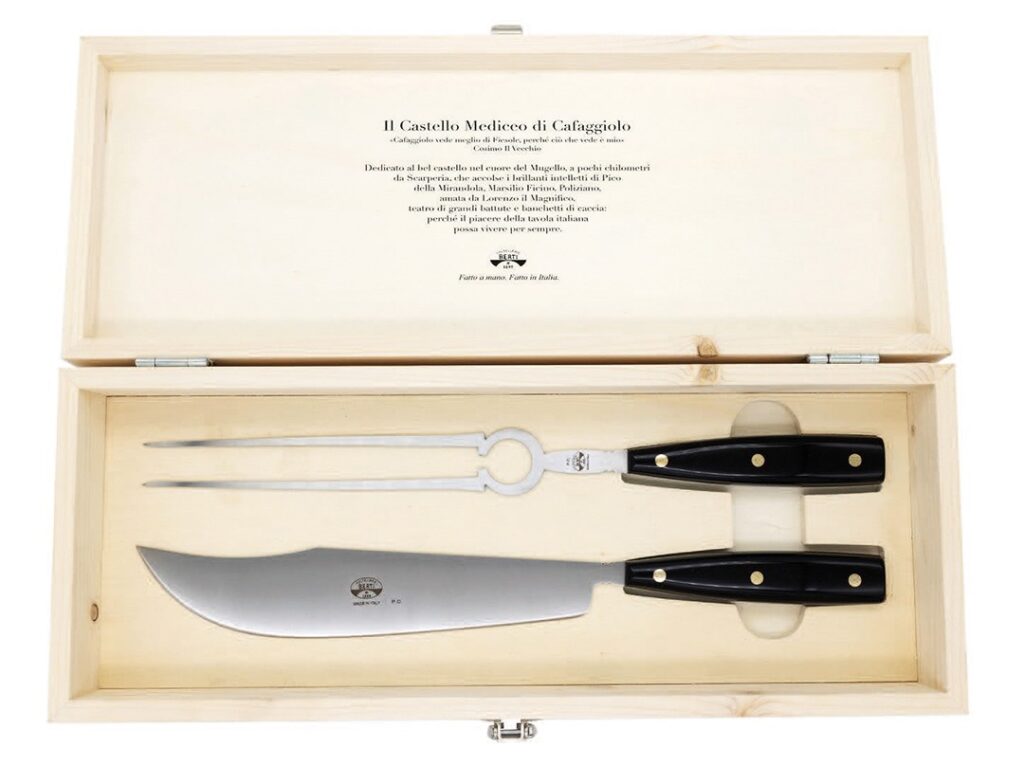
A good knife, precision and technique are the foundation of elegant carving.
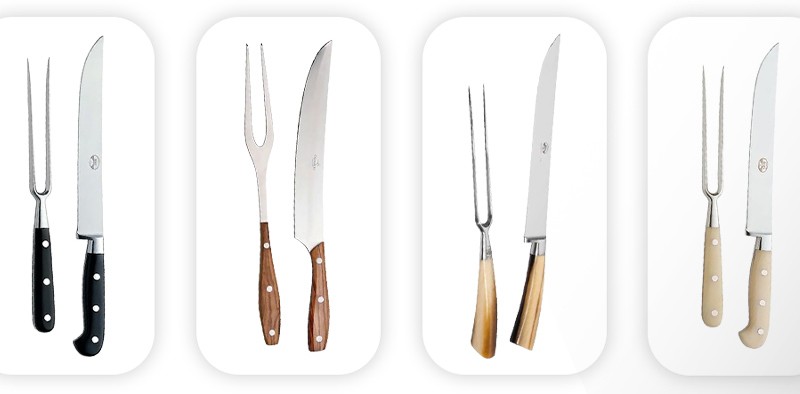
Our carving knives and forks are handcrafted in Scarperia, a village in Tuscany that has been the heart of the Italian knife-making industry for over 600 years.
Each piece is expertly designed to cut and serve perfect slices of meat, ensuring that both flavor and appearance are preserved.
Tips for the perfect carving
Rest the meat for 10 to 30 minutes, depending on the size of the roast, to allow the juices to redistribute, ensuring every slice is moist.
Use a high-quality, sharp and well-balanced carving knife (at least 8 inches long), a sturdy carving fork, and a large cutting board with a moat to catch juices. A sharp knife makes cleaner cuts with less tearing, preserving the flavor, texture and appearance of your roast.
Create clean portions. For a turkey or large roast, carve sections like legs, wings, and breast meat off the bone first. Then, slice those sections uniformly against the grain for a more tender bite.
The setting of the pool fountain is the spacious garden of a 1859 mansion located in the historic Garden District of New Orleans. The commissioner, a preservationist, purchased this gorgeous Henry Howard property with the intention of restoring it to its former glory and turning it into her family home. She had a deep passion for Italian ceramics and was seeking custom, hand-painted tiles for her pool fountain wall.
“As to the pool fountain wall, I want to make sure that the tile design can be enjoyed from a distance of up to 20 feet, meaning the design scale should be large enough to be appreciated from a longer distance, as well as close distance”.
This is the spectacular pool fountain we created:
We collaborated with Ghenos, a most talented Sicilian artist, and recommended a pattern of tritons and shells. Triton, a god of the sea, is a feature of some of the most beautiful Italian fountains, often portrayed with a conch shell, which he blew like a trumpet to calm or raise the waves.
Giulia Rampini is a young Italian ceramic artist, whose work is a unique blend of Gubbio’s tradition and modernity, reflecting her personal style. Her vibrant talent has already captivated the attention of ceramic enthusiasts in Italy.
Giulia’s roots in the world of ceramics run deep. She comes from a family of renowned artisans, with her grandfather founding the Rampini ceramic studio in 1954, and her parents continuing that legacy.
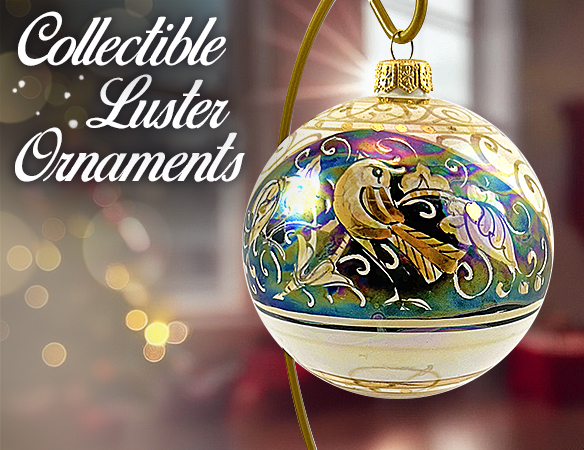
Hand-painted in Gubbio, the Lustre Christmas ornaments are a masterpiece of craftsmanship, bringing together the charm of traditional artistry with the magic of the season.
They are handcrafted by Rampini, artisans based in Gubbio. Founded by Pietro Rampini in 1954, this family-run studio is well-known for the sophisticated, elegant quality of its ceramics.
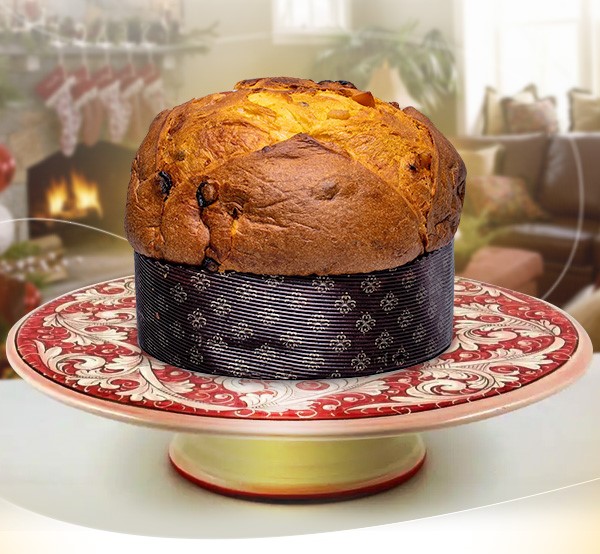
Pandoro, a name closely associated with Italian Christmas traditions, is a beloved dessert that has won the hearts of millions around the world. Its unique shape, rich buttery flavor, and fine texture make it a quintessential holiday treat in Italy.
Deeply rooted in Italy’s cultural and festive traditions, Pandoro is strongly linked to craftsmanship, often paired with hand-painted Italian ceramic cake platters. Together, they represent centuries of tradition.
Just as the Pandoro recipe has been perfected over generations, Italian ceramic cake platters are frequently passed down through families, becoming heirlooms that connect generations through their shared enjoyment of Christmas and family celebrations.
The history of Pandoro is not just about its delicious taste but also about the cultural and historical context that gave birth to one of the most iconic pastries in the world.
The Origins of Pandoro
The origins of Pandoro can be traced back to Verona, a city in northern Italy. Verona has a long history of baking traditions, and it is here that the story of Pandoro begins. The name “pandoro” itself is quite revealing; “pan” means “bread” in Italian, while “oro” translates to “gold.” This golden bread reflects the rich, luxurious nature of the dessert.
The Art and Heritage of Regional Pocket Knife Collections
As lovers and collectors of Italian arts and crafts, we often go out of our way to bring you hidden treasures from our country.
One of our most recent discoveries is the rich tradition of Italian pocket knives. Over the centuries, nearly every Italian region has contributed to this unique form of craftsmanship.
The geography of Italy has greatly influenced its people and their activities, leading local artisans to create specialized tools that suit the specific tasks of their communities, whether in farming, hunting, or breeding. Consequently, knife makers from different areas have designed blades tailored to meet everyday needs, reflecting the lifestyles of our ancestors.
While exploring the fascinating history of Italian knife making, we came across the Berti and Consigli regional pocket knives—two outstanding collections of meticulously crafted blades. These collections not only celebrate Italy’s regional diversity but also serve as powerful symbols of the enduring legacy of Italian artisanship and cultural richness.
Berti and Consigli, two small yet prestigious Tuscan companies, have embraced the centuries-old tradition of Italian knife-making. Over the past hundred years, they have hand-forged some of Italy’s finest knives, ranging from functional kitchen and steak knives to exquisite pocket knives.
We plan to introduce a new, unique ornament every year, with each piece representing the rich tradition of Italian ceramic art. The ornaments will be marked with the year of creation and signed by the artist to guarantee their authenticity. Begin your collection this year and enhance your holiday décor with a touch of Italian artistry.
Keepsake boxes are versatile Italian treasures, perfect as jewelry holders, party favors, candy boxes, or bomboniere.
While you may be familiar with the tradition of party favors, the bomboniere tradition might need some explaining for those who are not Italian.
Bomboniere are traditional gifts given to guests as tokens of gratitude for attending a wedding, christening, first communion, confirmation, or graduation party.
Make Panettone the highlight of your festive entertaining
Panettone is the ultimate Italian Christmas cake, instantly recognizable for its domed shape and its sweet, buttery dough studded with candied fruits and raisins.
Baking a panettone at home is a labor of love, but if you are up for the challenge, you can find a recipe at the end of this post. If you do not feel confident enough to make it yourself, don’t worry!
Most Italians purchase it from their favorite pasticceria, and you can probably find a quality Panettone at your local specialty store.